We might be scared at the end of the Gospel this Sunday “The chaff he will burn with unquenchable fire.”
He says this furiously, probably with spittle flying out of his mouth, we assume, right in to the face of the Pharisees and Sadducees. Is that the point of this Gospel today? To be scared? John apparently terrifies these men of the Law. They were even coming to be baptized as the Gospel says. The voice of the one crying out in the wilderness says to them “You brood of vipers! Who warned you to flee from the wrath to come?”
Well, I will say yes, and no. It is true John is terrifying them for a good reason. To bear fruit worthy of repentance. Yes, advent is a season of repentance, or in Greek, metanoia, to turn one’s mind… heart… purpose, back to God. It’s a time for a complete change in direction, if we are going the wrong way. It is a time to reflect and pray about where we are going and what parts of our lives need course changes.
But by our baptism we have appealed to God for metanoia or a course change. And, God has forgiven us. And, what’s more as we live this demand, this prayer, to be better, God hears us and gives us life and the power of His Spirit to do it.
I’ll ask a question, what is it to live in God’s spirit or let his spirit live in us, I might even ask, why? We can liken it with being in prayer. To say, “Father, hallowed be Your name. Your kingdom come and Your will be done.”
As Christians, we await this fulfillment of the coming the renewed earth and our life on God’s holy mountain, where the wolf shall live with the lamb, the leopard lie with the kid, the calf, lion and fatling together, all of whom shall be led by a little child. It might be obvious but there is a question to ask. If this is God’s plan, what do I need to do? What is my part?
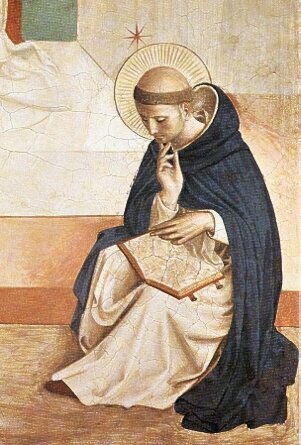
In a letter to his sister St. Augustine, answers the question of his sister “Why pray at all?” “Doesn’t God know what we need before we ask?” Or for us now in this season, Why can’t God just come already?!
St. Augustine, says, “Yes, He cannot fail to know our prayers.” Even before we say them, but God wants us to give more then we can ask. He wants us to give ourselves over to our holy desires in prayer. So that by creating such a longing in our hearts, God is able to prepare us to receive what He wants to give us.
The gift of His coming will be great indeed. His coming at Christmas; the coming into our lives; through His Body and Spirit; through the gift of your children finally taking responsibility of cleaning up their own toys; or helping siblings; or at least when brothers and sisters do not fight and try to love instead. And finally, the gift of Himself when He will come back to resurrect the dead and pass perfect judgement in Love and Truth.
He desires us to receive these things He wants to give, but our hearts are very small indeed. Our hearts are too small and too cramped to receive His great love.
This draws us back to the beginning, the unquenchable fire. This is the fire of His Love. The fire that destroys sin and the gross imperfection of hatred. The fire of His Love that makes us new creatures. In repentance we ask God to let the fire of His Love come into our hearts. Destroying the nests of pride and those of presumption. In prayer we blow on to it increase it’s heat, we feed the fire in our heart till it starts to consume the other parts of our life.
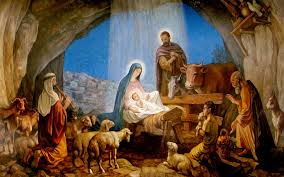
We let God do this to us and desire it with a longing deep and empty but bright, to make space. To make space for a child who will be born at Christmas, who could not find room at the inn, but we pray that there will be room in our hearts for His coming.
 Mary’s Little Bro — ANDREW HEAKES